Certified
Odoo Partner
1250+
Clients Served
98%
Client Retention
40+
Countries
8+
Years of Odoo Experience
What You Get When You Hire an Odoo Developer from Creyox
A good Odoo developer isn't just someone who can write Python against Odoo's ORM. Odoo's real complexity isn't the syntax, it's the fact that a change in one module ripples into three others, and a "quick fix" that ignores how your business actually operates usually creates a bigger problem six months later than the one it solved.
When you hire an Odoo developer from Creyox, you're getting someone who reads a requirement and asks why before deciding how. That distinction is the difference between code that technically does what was asked and a system that actually holds up under how your team really works day to day.
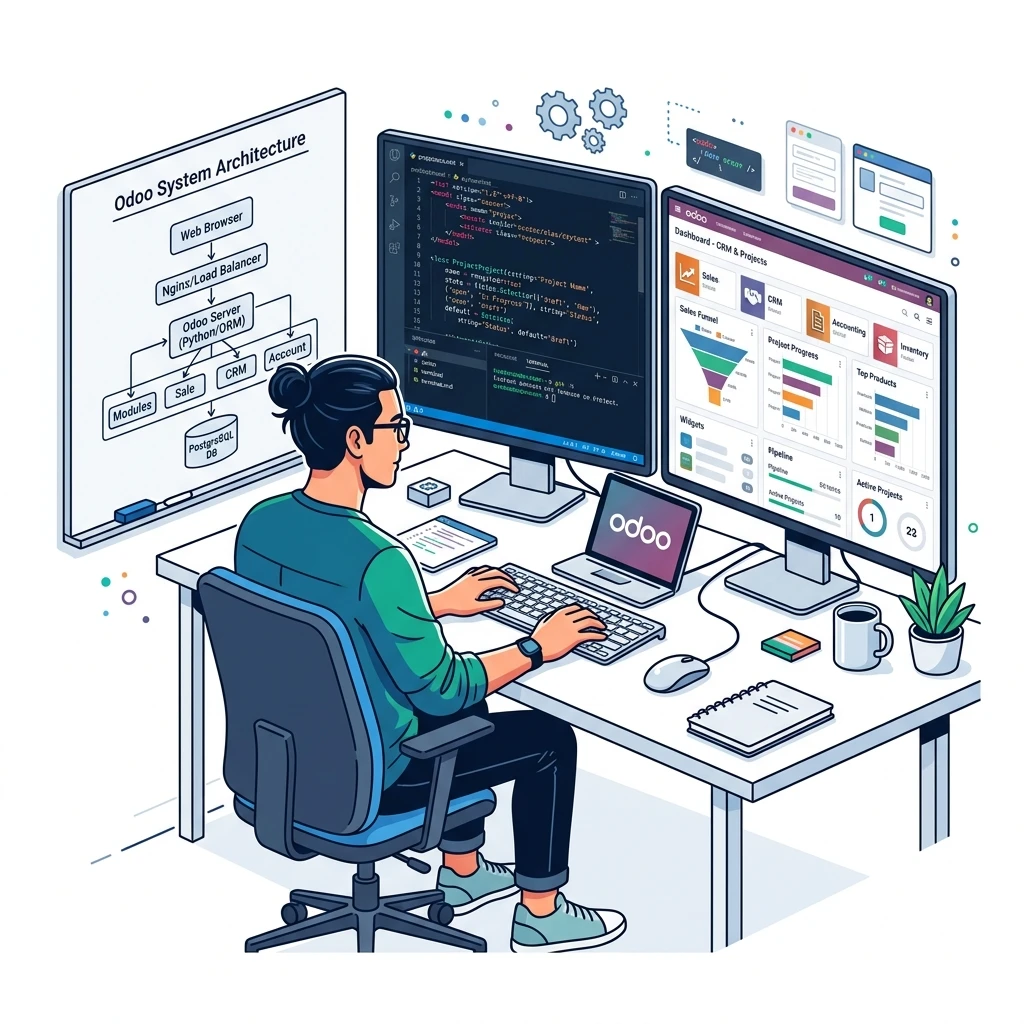
Choose the Type of Odoo Expert You Actually Need
Not every project needs the same kind of person. Here's how to think about it before you hire:
Odoo Developer
The right fit when you already know what needs to be built, a custom module, a bug fix, a specific feature. Deep in the codebase, focused on execution.
Odoo Functional Consultant
The right fit when the problem isn't "we need code," it's "we're not sure our processes are set up correctly." Focused on configuration, workflow mapping, and getting standard Odoo to do more before any custom development gets scoped.
Odoo Techno-Functional Consultant
The right fit for messier, less-defined problems, someone who can sit in a requirements conversation, understand the business logic, and also know exactly what it takes to build it. Bridges the gap between "what we want" and "what's technically involved."
Dedicated Odoo Team
The right fit for larger or ongoing engagements a developer, a functional consultant, and a project manager working together, so you're not managing three separate relationships and three separate learning curves.
Odoo Project Manager
The right fit when the engagement itself has gotten complex enough that someone needs to own scope, timeline, and communication full-time, so nothing falls through the cracks between the technical and business sides.
How Our Developers Actually Approach Your Project
This is the part most "hire a developer" pages skip, and it's the part that actually determines whether the work holds up.
Before any of our developers write custom code, they check two things first: whether standard Odoo configuration already solves the problem (no code needed, faster, cheaper), and if not, whether it's something Odoo's own Studio tools can handle before reaching for full custom development. This isn't a sales pitch, it's the same sequence we use internally, because a developer who jumps straight to writing code is usually solving the expensive version of a problem that has a cheaper answer.
It also means the developer you hire isn't working in isolation. Every custom build follows Odoo's official coding standards specifically so it survives your next version upgrade instead of becoming a rebuild project in two years — a detail that's easy to skip when you're being billed by the hour and hard to verify unless someone's actually checking.
Areas of Expertise
Our developers and consultants work across the full range of what an Odoo engagement typically needs:
Custom module development
building functionality from scratch when nothing standard covers it
Module customization
adjusting existing modules to match how your team actually works
Odoo implementation
full requirement-to-go-live delivery
Third-party integrations
connecting Odoo to payment gateways, CRMs, shipping providers, and other tools you already run on
Migration & version upgrades
moving data and configurations forward without losing what already works
Performance optimization
fixing slow queries, cleaning up bloated code, tuning the system for your actual usage patterns
Workflow automation
removing repetitive manual steps from processes that shouldn't need a human doing them by hand
Ongoing support & maintenance
keeping the system stable well past go-live, not disappearing after delivery
Odoo consulting & training
for teams that need process guidance and internal upskilling alongside the technical work
Full business systems beyond core Odoo
our developers also work across ERP, CRM, and POS implementations built on Odoo, and web development when your Odoo project includes a customer-facing storefront or portal
Flexible Hiring Models
Project-Based / Fixed Scope
Best when you already know exactly what you need. We scope the requirement, agree on cost and timeline upfront, and deliver against that plan good fit for a defined module, a specific integration, or a one-time build.
Hourly / Part-Time
Best for ongoing, smaller, or evolving needs bug fixes, incremental improvements, a system that needs continuous small adjustments rather than one big project. You get flexibility without re-scoping a new contract every time something changes.
Dedicated / Monthly
Best for larger, longer-running engagements where you want a consistent developer or team who already understands your system, rather than re-explaining context every time you need something done. This is usually the right call once you're past a single project and into ongoing platform ownership.
How Hiring Works — Our Process
1. Requirement Conversation
We start by understanding what you're actually trying to solve not just the feature request, but the business problem behind it. This is a real discussion, not a form to fill out. We ask about your existing Odoo setup, your workflows, your pain points, and your long-term goals, so the solution we propose actually fits how your business runs, not just what you initially asked for.

2. Scope & Estimate
Based on that conversation, we put together a realistic scope and cost estimate fixed, hourly, or dedicated, depending on what fits your budget, timeline, and how well-defined the requirements are. We'll walk you through the trade-offs of each engagement model so you can pick the one that gives you the right balance of cost control and flexibility.
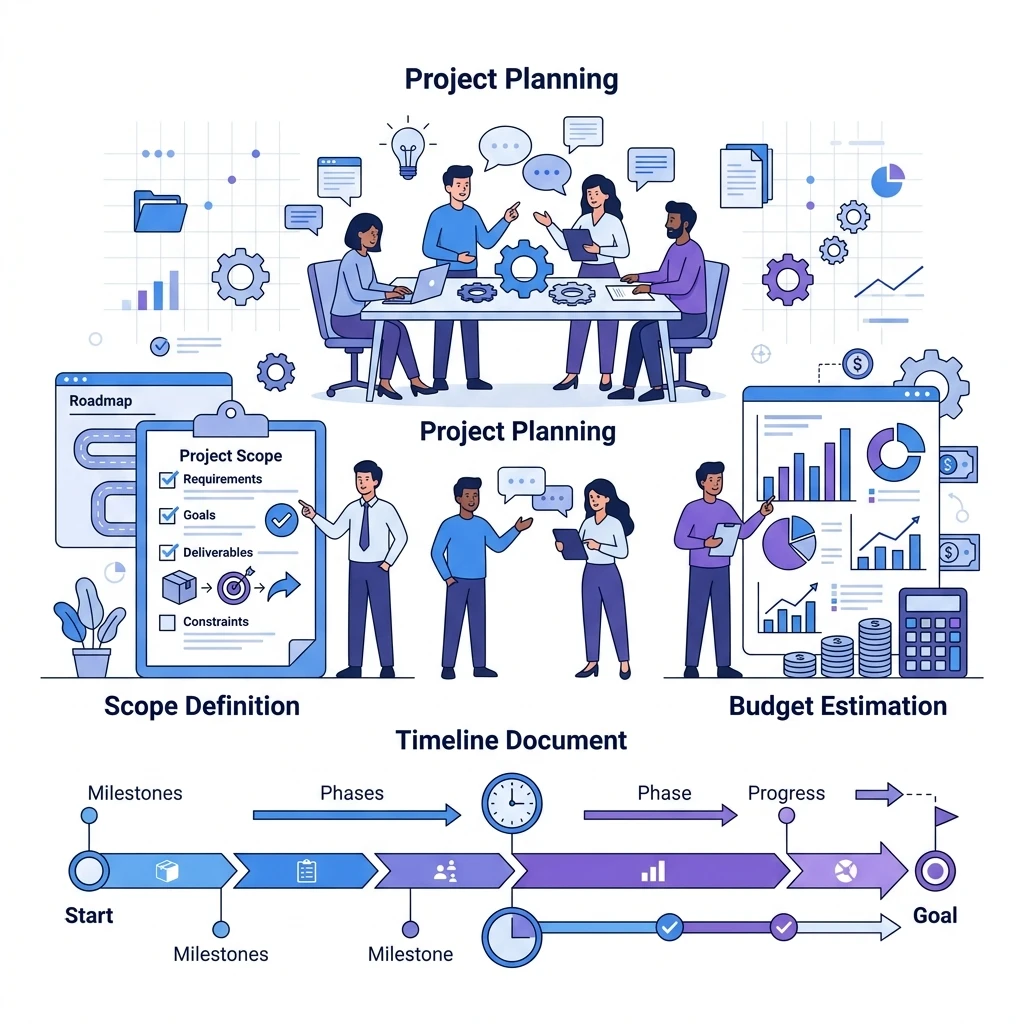
3. Agreement
Terms, scope, and expectations get confirmed in writing before anyone starts, including NDA and data-handling terms. This covers deliverables, timelines, communication norms, and IP ownership, so both sides are protected and there's no ambiguity once development begins.

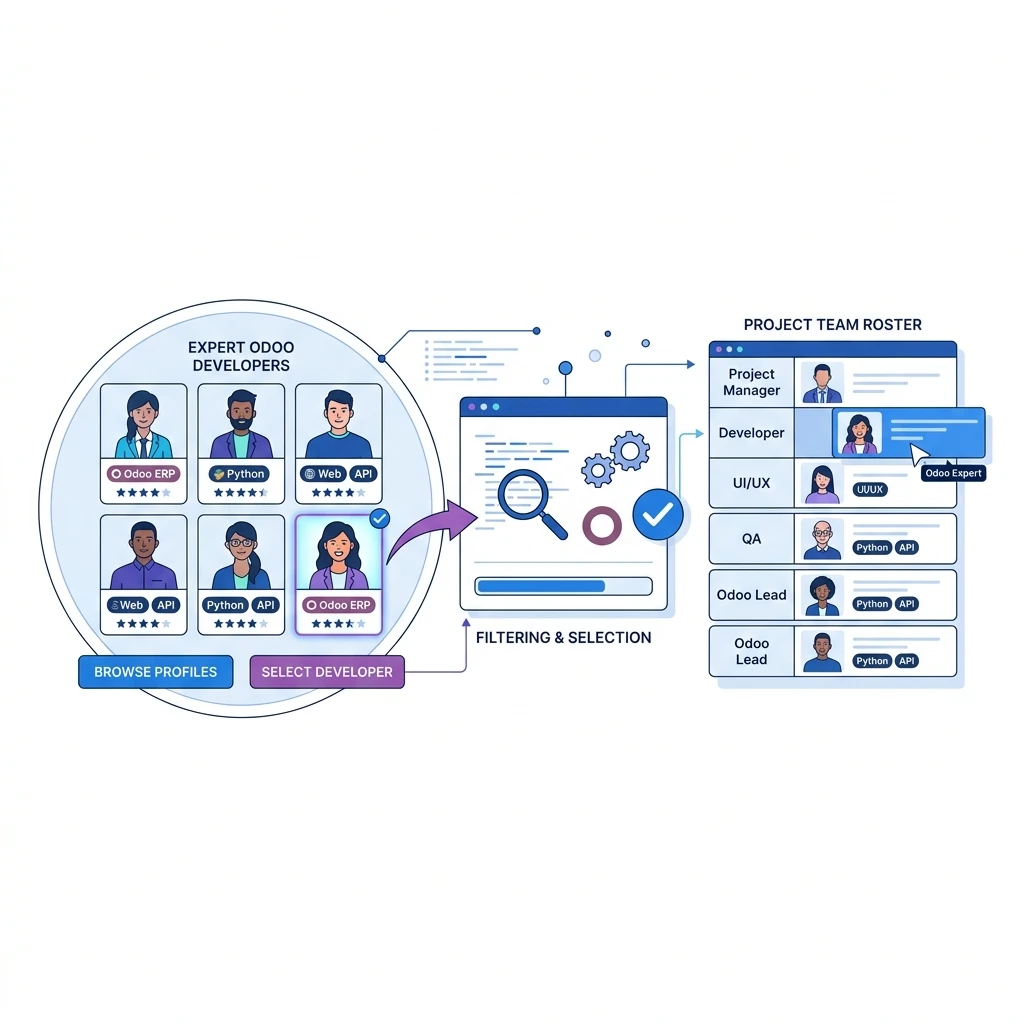
4. Team Assignment
We match you with the right developer, consultant, or team based on your project's actual technical and functional needs not just whoever's next in the queue. If your project needs someone with specific module experience (inventory, manufacturing, POS, custom integrations), that's who gets assigned, not a generalist stretched across unfamiliar territory.
5. Onboarding & Kickoff
A short onboarding period to get the assigned developer(s) up to speed on your system, your priorities, and how you like to communicate. We set up access, tools, and reporting cadence during this phase, so there's no fumbling around once real work starts.

6. Ongoing Delivery
Work proceeds with regular check-ins and visible progress you shouldn't have to chase status updates. Depending on your preference, this can mean weekly syncs, sprint-based updates, shared task boards, or direct access to the developer for daily standups whatever keeps you informed without adding overhead to your day.

7. Continue or Wrap Up
At the end of the engagement, extend the contract if there's more to do, or wrap up with a clean handover and documentation including code, configurations, and knowledge transfer so your internal team (or the next developer) can pick things up without missing context.

Why Creyox Over a Freelancer or Another Agency
The honest answer isn't that freelancers can't write good Odoo code plenty can. What changes when you hire through a partner isn't the code quality on a good day, it's what happens on a bad one.
A freelancer's business doesn't depend on your project succeeding past delivery once the invoice is paid, the relationship often ends there. A partner's business depends on you coming back, which changes how carefully a project gets scoped and how seriously issues get handled after go-live.
There's also a verification problem most businesses don't think about until it bites them: unless you can personally read Python and Odoo's internals, you can't tell good customization code from code that happens to work today and breaks on the next version upgrade. Certified partners follow Odoo's own development standards specifically so that gap doesn't become your problem eighteen months from now.
And there's the single point of failure question. If the one person who built your system goes on leave, changes jobs, or simply gets busy with another client, what happens to your support request? With a team-based partner, someone else already has context on your project. The business doesn't stop because one person is unavailable.
None of this means freelancers are wrong for every situation. For a very small, clearly scoped, one-off task, a freelancer can be a perfectly reasonable choice. The calculus changes once the system becomes something your business actually depends on running correctly.