Your Odoo system is live. The data is moved, the setup is done, and the project is marked complete. Then you look at how people actually work. The spreadsheets are still open, orders are tracked in chat messages, and one person answers every "how do I do this?" question.
That gap is where Odoo training ROI gets decided. In our view, training is easy to postpone when budgets are tight, and it is also one of the easiest things to justify once you measure it. This guide gives you a method, not statistics: why adoption matters, where training value shows up, and how to work out your own return.
Odoo Training ROI: The Short Answer
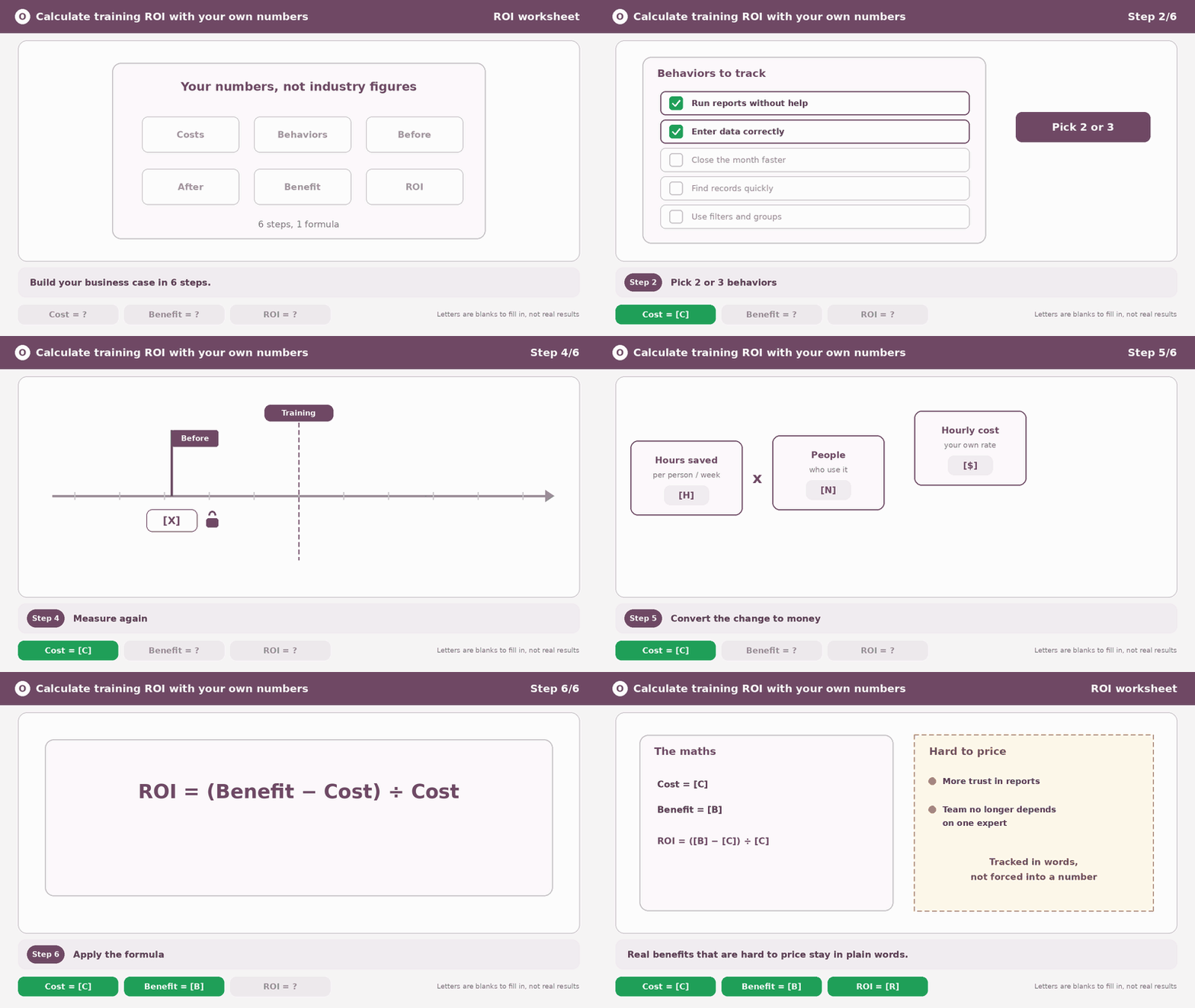
Training pays back when it changes what people do in the system. If your team enters accurate data on time, follows the workflows, and reads the reports, the system produces value. If they don't, it doesn't. You can only prove the difference by measuring behavior before and after training, then turning that change into money using your own costs.
Why User Adoption Decides Whether an Implementation Works
Here is an analogy, not a statistic. Imagine a company buys a fully equipped gym for its staff. The equipment is excellent, but nobody has been shown how to use it, so most people stay away. The gym looks like a good purchase on paper and a poor one in practice.
An ERP follows a simple chain. People enter data. That data feeds the reports. The reports drive decisions about what to buy, who to chase, and what to plan. If the first link is weak, every link after it weakens too. Late or partial data gives you reports nobody trusts, and untrusted reports get ignored.
That is why our view is that adoption is the deciding factor in whether an implementation pays off. It isn't the only factor. Poor scoping, messy starting data, or a setup that doesn't fit your business can undermine a team that is fully trained. Training doesn't fix those problems. It makes sure that when the system is right, people can use it.
Signs Your Team Is Not Really Using Odoo
These are general observations, and you can check them in a week:
- Parallel spreadsheets. People keep their own files "just in case."
- Late or bulk data entry. Records appear days late, or all at once before a deadline.
- Workarounds. Approvals and notes happen in chat or email instead.
- Repeated "how do I" questions. The same basic questions keep coming back.
- Reports nobody trusts. Managers ask for a separate check before relying on a number.
- One expert everyone depends on. When they are away, work stalls.
If you recognize three or more, the problem is probably adoption, not the software.
What Does Training Return? Where the Value Shows Up
Training rarely creates one dramatic result. The value shows up in several places, and you only need to track the two or three that matter most to you.
Area | What to look at | How to measure it |
Time on routine tasks | How long common tasks take | Time a few people doing the same task before and after |
Errors and rework | Wrong entries and corrections | Count corrections over the same period |
Support questions | Basic "how do I" requests | Count and group them before and after |
Data quality | Missing fields, duplicates | Sample records against a simple checklist |
Use of reports | Whether managers act on reports | Ask managers which reports they use |
New hires | How quickly they work independently | Note how long before they need no constant help |
How to Calculate Odoo Training ROI With Your Own Numbers
What Good Odoo Training Looks Like
This section is our recommendation and general best practice. For how Creyox runs training, see our Odoo training services.
Train by role, not all at once. Everyday users need the workflows they touch daily and how to enter data correctly. Team leads need to read reports and check the quality of their team's data. Finance and admin staff need their routine steps end to end. Key users need to handle common questions. New hires need a short written guide and a named person to ask.
A few habits make training stick:
- Practice on a test copy, so mistakes cost nothing.
- Use short sessions spread over time instead of one long day.
- Name an internal champion in each team for everyday questions.
- Plan support for the first weeks after go-live, when questions are most frequent.
- Schedule refreshers, because skills fade and teams change.
Common Training Mistakes
- Training only before go-live. Real questions appear once real work starts.
- One session for everyone. Most of it won't apply to most of the room.
- No practice environment. People afraid of breaking live data avoid the system.
- No owner. Without follow-up, habits drift back to spreadsheets.
- No measurement. You can't show the value, so training is easy to cut next time.
When Odoo Changes, Refresh the Training
Training isn't a one-time event. The Odoo 20 release notes show why: payment statuses were renamed ("In Process" is now "Paid," and "Paid" is now "Reconciled"), and Field Service is merged into Planning. Someone trained on the old labels can easily misread a status.
None of this is hard to learn. The risk is that people don't know something has changed. Our recommendation is to brief users on renamed items before an upgrade and refresh the guides afterward. The process is in our Odoo migration checklist.
Do It In-House or Bring In a Partner?
Our opinion: either can work.
In-house training suits a small team with fairly simple workflows and a capable expert who has time to teach. Its main risk is that the expert's regular work keeps pushing training aside. A partner helps when nobody has the time or experience, when the team is large or spread across locations, or when you want someone outside the project to run the sessions. Whichever route you choose, measure the result the same way.
Final Thoughts
An Odoo system doesn't produce value by being installed. It produces value when people use it correctly every day. Training is how you get there, and measurement is how you prove it worked.
Start small. Pick two or three behaviors, record a baseline, train by role, and measure again. Then you'll have your own numbers for anyone who asks whether training was worth it. If you'd like to talk through training for your team, Creyox can help you plan what to teach, to whom, and how to measure the result. Get in touch and we'll look at your setup together.
Frequently Asked Questions
Record a baseline before training for two or three behaviors, such as time on routine tasks, errors, or support questions. Measure again afterward, convert the change to money using your own hourly cost, and apply ROI = (benefit − cost) ÷ cost.
Odoo only produces value when people enter accurate data and use its workflows and reports. Weak adoption means unreliable data, reports nobody trusts, and workarounds outside the system, even when the setup itself is sound.
It depends on team size, roles, and how complex your workflows are. Role-based, spaced sessions plus support after go-live usually work better than a single long session, so plan the schedule around your teams.
Everyone who uses it, in sessions suited to their role: everyday users, team leads, finance and admin staff, key users, and senior leaders who read reports. New hires also need a short onboarding path.
It usually is when it changes how people work, but you should confirm it with your own numbers. Measure behavior before and after training, include the cost of staff time, and track hard-to-price benefits separately.